In the early hours of January 3, 2026, United States Delta Force operators breached a fortified compound in Caracas, Venezuela, extracted sitting President Nicolás Maduro and his wife, Cilia Flores, at gunpoint, and transported them aboard the USS Iwo Jima to face narco-terrorism charges in a Manhattan federal court. The operation, codenamed Absolute Resolve, killed more than 100 Venezuelans, injured seven U.S. troops, and shocked the international community in ways that transcended the fate of a single authoritarian leader.
The U.S. seizure of Venezuela’s president marks a deeper transformation in Western Hemisphere geopolitics. By disguising regime change as law enforcement, the Trump administration undermined norms of sovereignty and recast Venezuela’s oil reserves as the central stake in an intensifying great-power struggle. But if economic extraction takes priority over democratic recovery, the operation risks substituting one form of foreign control for another.
The legal architecture the Trump administration constructed to justify Absolute Resolve was deliberately fragile. President Donald Trump and Secretary of State Marco Rubio framed the operation as a "law enforcement action with military support," invoking the president's inherent constitutional authority rather than seeking congressional approval, a maneuver that several Democratic senators publicly condemned as deceptive after Rubio and Defense Secretary Pete Hegseth had told lawmakers weeks earlier that regime change was not the administration's goal.
The United Nations Secretary-General António Guterres declared that U.S. actions carried "worrying implications for the region" and constituted a "dangerous precedent," while China and Russia demanded Maduro's immediate release at an emergency UN Security Council session. The 1989 U.S. invasion of Panama to capture Manuel Noriega offers the clearest historical parallel, but it is not an exact precedent. What makes this case different is the institutional environment of Trump’s second administration, which is far more structured around expansive and weakly constrained executive power. Senator Mark Warner crystallized the stakes for international order, asking: That question remains unanswered, and its implications extend well beyond Latin America.
Does this mean any large country can indict the ruler of a smaller adjacent country and take that person out?
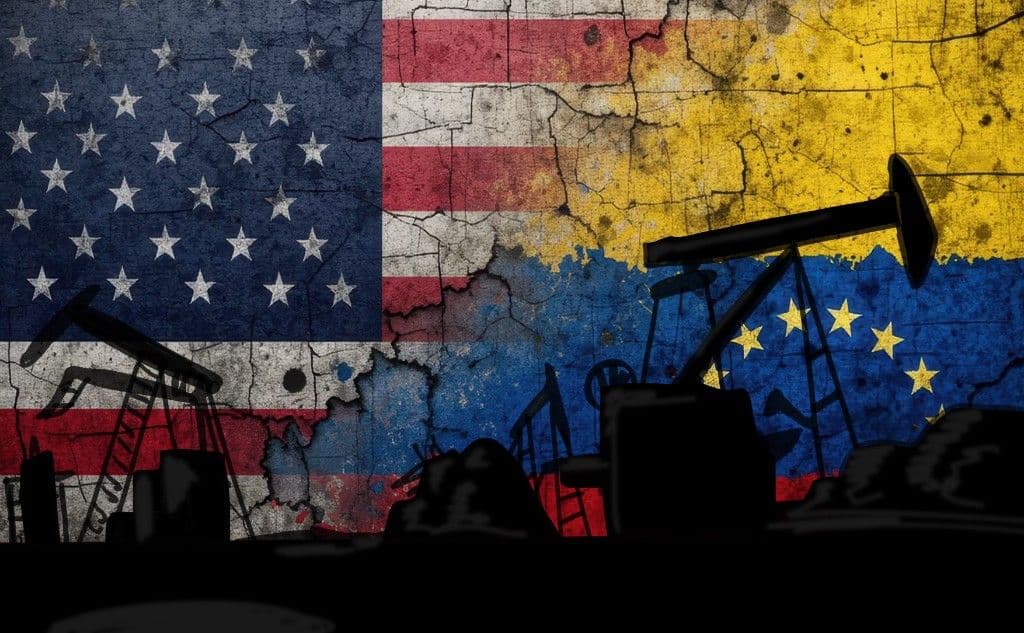
The operation's real engine was oil. Venezuela holds the world's largest proven oil reserves, but chronic mismanagement, U.S. sanctions, and corruption under Maduro had reduced production from roughly two million barrels per day at its peak to approximately 900,000 barrels per day by late 2025, less than one-fourth of Texas's daily output. Within hours of the raid, Trump promised American energy companies would invest "billions and billions of dollars" to rebuild Venezuela's infrastructure, and his administration moved swiftly to issue new general licenses facilitating U.S. oil and gas exploration while explicitly excluding Chinese, Russian, and Iranian companies from sanctions relief.
U.S. Energy Secretary Chris Wright traveled to Caracas in February 2026 for the highest-level American energy visit in nearly three decades, meeting with interim President Delcy Rodríguez at the Miraflores Palace to discuss a $100 billion reconstruction plan. The administration's framework was that Venezuelan oil would flow through "authorized channels consistent with U.S. law and national security," placing Washington at the center of all Venezuelan crude marketing.
What this framing obscures is the extraordinary complexity and hubris of the underlying ambition. Venezuela's extra-heavy crude requires specialized coker refineries to process, and its production infrastructure has deteriorated so severely that rapid increases remain unlikely regardless of investment levels. Venezuela's ambassador to China publicly stated that oil prices would follow international markets, not U.S. arrangements, while Chinese state-owned firms Sinopec and CNPC, holding 2.8 billion and 1.6 billion barrels of Venezuelan reserves respectively, sought reassurances that their investments remained secure.
Venezuela averaged more than 600,000 barrels per day in exports to China in December 2025, constituting roughly four percent of China's total oil imports. By attempting to sever those flows, Washington was not simply displacing a competitor; it was disrupting an energy pricing model on which significant segments of the Chinese economy depend, an escalation with consequences far beyond Caracas. The great-power dimension of the operation reveals a paradox that analysts at the Atlantic Council and the Carnegie Endowment for International Peace have both identified, that China may benefit from Maduro's ouster even as it condemns it.
Beijing had already seen Venezuelan oil production disappoint, and its approximately $50 to $60 billion in Venezuelan loans and investments were souring under years of mismanagement. With the United States now owning the problem of Venezuelan reconstruction, China can distance itself from Maduro's failures, portray itself as a defender of sovereignty and international law to skeptical developing nations, and, if U.S. investment succeeds in boosting production, potentially resume discounted Venezuelan crude purchases under new arrangements.
Russia, meanwhile, stands to gain most directly. As Chinese refineries pivot away from Venezuelan crude, they will turn to Russian oil to fill the gap, strengthening Moscow's leverage over Beijing at a critical moment. The operation, designed to reassert U.S. hemispheric dominance, may inadvertently strengthen the very rivals it sought to weaken. The question of whether economic engagement and democratic transition can coexist in Venezuela remains the most consequential uncertainty.
Trump himself warned Rodríguez that she could "pay a very big price" if she failed to cooperate on oil, a statement that reveals the administration's priorities with uncomfortable clarity. Brookings Institution analysts cautioned that focusing narrowly on oil access or prioritizing creditor repayment over democratic recovery would risk creating a narrow class of rent-seekers while leaving Venezuela's broken institutions intact.
The Venezuelan people, who endured nearly eight million emigrants departing under Maduro and an economy that left average citizens earning roughly $1,400 per year, deserve more than a transition from one form of resource extraction to another.
Latin American neighbors registered their own alarm. Brazil, Mexico, and Colombia condemned the operation, while Colombia's President Gustavo Petro warned he would "take up arms" if similar intervention threatened his country, and thousands of Colombians poured into the streets in protest. The capture of Nicolás Maduro is norm-shattering not merely because a sitting president was seized at gunpoint, but because of what the operation announces about the logic of power in the twenty-first century.
When Trump declared that American dominance in the Western Hemisphere would never be questioned again, he was not articulating a law enforcement principle; he was issuing a geopolitical doctrine. The danger is not that this doctrine will fail in Venezuela; it may, in fact, succeed in stabilizing oil flows. The danger is that it licenses every major power to apply the same logic within their own spheres: China toward Taiwan, Russia toward its periphery, and regional hegemons toward their smaller neighbors.
A rules-based international order has historically protected smaller states from the unconstrained ambitions of larger ones. Whether Venezuela marks the beginning of that order's collapse, or merely another chapter in a long history of great-power intervention, depends on whether international institutions can reassert meaningful constraints, or whether power, as Absolute Resolve suggests, has simply become its own justification.