The international community often speaks of ‘never again.’ Yet in 2026, the silence surrounding Sudan is deafening. While the world’s cameras remain fixed on the Middle East and the Levant, a country of 48 million people is being dismantled in the dark. Since April 2023, the struggle between the Sudanese Armed Forces, the main state military power, and the Rapid Support Forces, a Sudanese paramilitary group, has devolved from a power struggle into a systemic erasure of civilian life.
The global indifference towards Sudan’s famine and displacement reveals a persistent and dangerous hierarchy in international diplomacy, where African lives are treated as geopolitically peripheral, effectively giving a green light to war crimes that would be met with immediate outrage and intervention elsewhere. This is not merely a tragedy of African instability; it is a curated abandonment.
The international community often speaks of 'never again.' Yet in 2026, the silence surrounding Sudan is deafening.
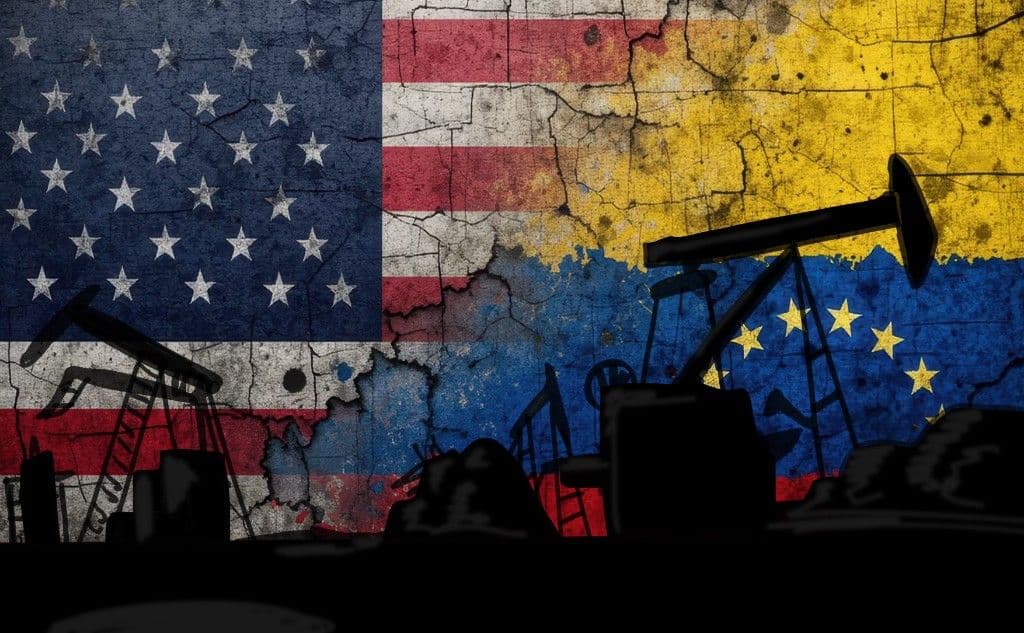
Why does a death in Kharkiv command a headline while a massacre in El Geneina barely warrants an update? The answer lies in geopolitical alignment. The war in Ukraine is framed as a civilizational struggle for the post-WWII order; it is a ‘neat’ war with a clear aggressor and a clear defender. Sudan, conversely, suffers from what sociologists call “compassion fatigue” born of racialized perceptions. Western audiences have been conditioned to view African conflict as an inevitable, “natural” state of being rather than a preventable political crisis.
Furthermore, the informational vacuum in Sudan is another instrument of conflict. Unlike the citizen-journalism that thrives in Gaza or Ukraine, Sudan faces systemic internet blackouts and the targeted dismantling of local Emergency Response Rooms (ERRs). Without the viral imagery of suffering, the conflict lacks the emotional currency needed to drive Western domestic policy.
We have created a world where humanitarian aid follows the camera lens; in Sudan, the lens has been intentionally shattered.
We have created a world where humanitarian aid follows the camera lens in Sudan; the lens has been intentionally shattered. Sudan is no longer a civil war; it is a commercialized proxy battle. The RSF, led by Mohamed Hamdan “Hemedti” Dagalo, in truth, is a gold-funded enterprise. Supported by the United Arab Emirates via smuggling routes through Chad and Libya, the RSF utilizes high-tech weaponry and mercenary networks that bypass traditional state controls.
On the other side, the SAF’S General Abdel Fattah al-Burhan has courted Egypt, Iran, and Turkey. These nations are not motivated by Sudanese democracy; they are motivated by the Red Sea’s strategic value and the desire to prevent a total militia-state. This creates what political scientists call a ‘Mutually Hurting Stalemate,” but with a twist: the actors are not hurting enough to stop. As long as gold flows out and drones flow in, neither general has an incentive to blink.
The international community’s failure to sanction these external enablers effectively gives a green light to continued violence. Negotiation requires a middle ground, but in Sudan, the ground has been burnt away. For Buhran and Hemedti, this is an existential zero-sum game. This is primarily because both men have been implicated in war crimes, including the 2019 Khartoum Massacre and ongoing ethnic cleansing in Darfur, a peace deal that includes a transition to civilian rule likely ends with them in a cell at the International Criminal Court.
This is compounded by the weaponization of ethnicity. The RSF has framed its campaign in Darfur as a ‘liberation’ for Arab tribes against ‘African’ groups like the Masalit. When a war shifts from political power to ethnic survival, compromise is no longer seen as diplomacy, but rather as an existential betrayal of the tribe. The United Nations Security Council remains paralyzed, with Russia and China wary of any intervention that might set a precedent for interference in internal affairs.
However, famine is not an internal affair; it is a global failure. If international organizations and major powers do not pivot from expressing concern to aggressive financial targeting of the RSF’s gold networks and the SAF’s military backers, they risk complicity in the starvation of millions. Sudan proves that our global community is a tiered system. Until we dismantle the idea that some regions are destined for chaos, we will continue to watch from the sidelines as the largest displacement crisis of the 21st century unfolds in silence. Supported by the United Arab Emirates via smuggling routes through Chad and Libya, the RSF utilizes high-tech weaponry and mercenary networks that bypass traditional state controls.