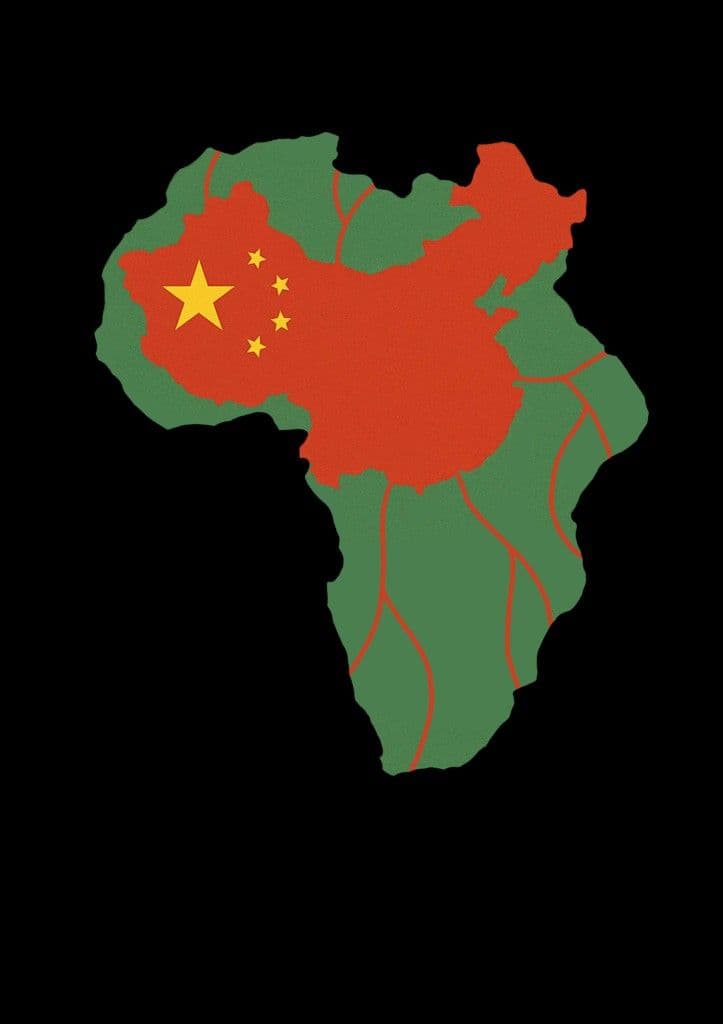
China’s Belt and Road Initiative: Legitimate Investments or Debt-trap Diplomacy? China’s Belt and Road Initiative, established in 2013 under Xi Jinping, has become one of the most significant forces shaping infrastructure development across continents. Sometimes referred to as the New Silk Road, the project’s purpose is to link East Asia to Europe through physical infrastructure, such as railways, highways, and energy pipelines, mainly in less economically developed countries (LEDCs).
Aiming to “break the bottleneck in Asian connectivity,” as declared by Xi, the BRI was established as part of China’s broader effort to take on a more assertive role in bilateral relations. As of early 2025, more than 150 countries representing nearly 75 percent of the world's population and over half of the global GDP have joined the BRI, making 176 deals and generating over $124 billion in the year alone. Since its founding, the BRI has generated more than $1.308 trillion.
Specifically, with over 53 countries signed to the BRI, Africa has been a main recipient of funding for projects. Countries such as Nigeria and Egypt are amongst the biggest partners in the BRI, receiving investments of $21 billion and 4.8 billion, respectively. However, the impact of the Belt and Road Initiative on African economies remains highly debated: while many Western-centric sources argue that it traps low-income nations in cycles of debt, many economists believe that the initiative’s investment framework can be economically beneficial.
In recent years, the BRI has been named a “debt-trap diplomacy” over concerns regarding high-interest loans imposed on low-income countries, limiting long-term economic independence. The narrative, first proposed by Brahma Chellaney in his 2017 article “China’s Debt-Trap Diplomacy,” gained traction following the 2017 handover of Sri Lanka's Hambantota Port to China on a 99-year lease after the country struggled to repay loans.
Many Western sources such as the Center for Strategic and International Studies have argued that the handover threatened the country’s sovereignty, and Namal Rajapaksa, a member of Parliament and son of the former president, questioned whether the government was “playing geopolitics with national assets.” Similarly, in Ethiopia, the “second largest African borrower of Chinese investments,” heavy reliance on loans from Chinese state-owned banks (specifically the EXIM Bank that is closely tied to China’s state-controlled economy) made the country vulnerable to fluctuations in China’s economic health.
In particular, following the Covid-19 pandemic and the resulting slowdown in China’s economy, the IMF estimated that a “one percent reduction in China’s economic growth rate could cause a 0.25 percent decline in Africa’s GDP.”
Without the participation of China in this endeavor, African countries still stand to suffer.
Because African economies are so closely tied with China’s, a slowdown in China would limit investment into infrastructure projects. While many countries in the international community assisted in debt relief, “ ” Therefore, the economic well-being of many African countries’ economies is largely dependent on the BRI, leading to high-risk investments that increase LEDCs’ debt to China. However, the widespread critiques of the BRI are often framed as Western-centric perspectives that overlook the initiative’s economic benefits.
In an article published in Liberation News by Amanda Yee, the concept of “debt-trap diplomacy” is described as a Western-centric, bipartisan narrative “advanced by organizations such as the U.S. International Development Finance Corporation and corporate media outlets like The New York Times, The Washington Post, and The Hill.” Through citing an edited interview published by BBC News in which Deborah Bräutigam’s criticism of the “debt-trap” myth is omitted, Yee argues that Western media sustain a narrative portraying China as a neo-colonial power exploiting the Global South.
Support for the Belt and Road Initiative is often rooted in two key reasons. First, China has shown flexibility with its loan terms: in August 2022, the Chinese government announced the forgiveness of “23 interest-free loans across 17 African countries.” Prior to that, between 2000 and 2019, China restructured $15 billion of debt and canceled $3.4 billion in loans extended to African nations. Second, infrastructure projects under the initiative are typically determined by the recipient countries themselves, allowing them to align investments with their own economic and political priorities.
The failure of BRI projects, therefore, is often the cause of both China’s “fragmented,”“poorly coordinated” development financing system and the “misconduct of local elites and Western-dominated financial markets” by recipient governments. In the case of Sri Lanka’s handover of Hambantota Port, which the Sri Lankan government had planned for many years, Kotte first approached India and the United States for financial support and only resorted to China after those requests were declined.
Sri Lanka primarily incurred its debt through Western sources, such as the World Bank and Japan, and eventually arranged a bailout through the International Monetary Fund. Considering the Hambantota Port a “commercial failure,” the government once again approached Indian and Japanese firms to pay off its debt before negotiating with China Merchant Ports Holdings after being rejected. Then United States Vice President Mike Pence expressed fear that the port would “soon become a forward military base for China’s growing blue-water navy.”
However, “Karunasena Kodituwakku, the ambassador of Sri Lanka to China, even bluntly stat[ed] in an interview: “ ” This questions the characterization of the BRI as “debt-trap diplomacy,” suggesting that failures in projects might be the result of local incompetence.
China never asked us. We never offered it.
The Belt and Road Initiative serves as a double-edged sword for many African countries. On one hand, the accumulation of debt has raised concerns about long-term dependency and economic sovereignty. On the other hand, these doubts are highly contested, as the initiative has provided unprecedented infrastructure development and significant economic growth for LEDCs.