On April 29, 2026, the administrator of the U.S. Environmental Protection Agency (EPA), Lee Zeldin, appeared before the Senate environment committee to discuss further department budget cuts. His proposed budget of $4.2 billion is a sharp decrease from the currently enacted $8.8 billion, a change that Zeldin claimed would allow the Agency to become a “leaner, more efficient and accountable EPA.” Earlier in April, Zeldin appeared as a keynote speaker at the Heartland Institute’s International Climate Change Conference—a climate-denying group who once compared climate activists to the Unabomber, during which Zeldin dismissed the plethora of scientific evidence corroborating climate change and praised conference attendees for being “right there on the front lines against there being an endangerment finding in 2009.”
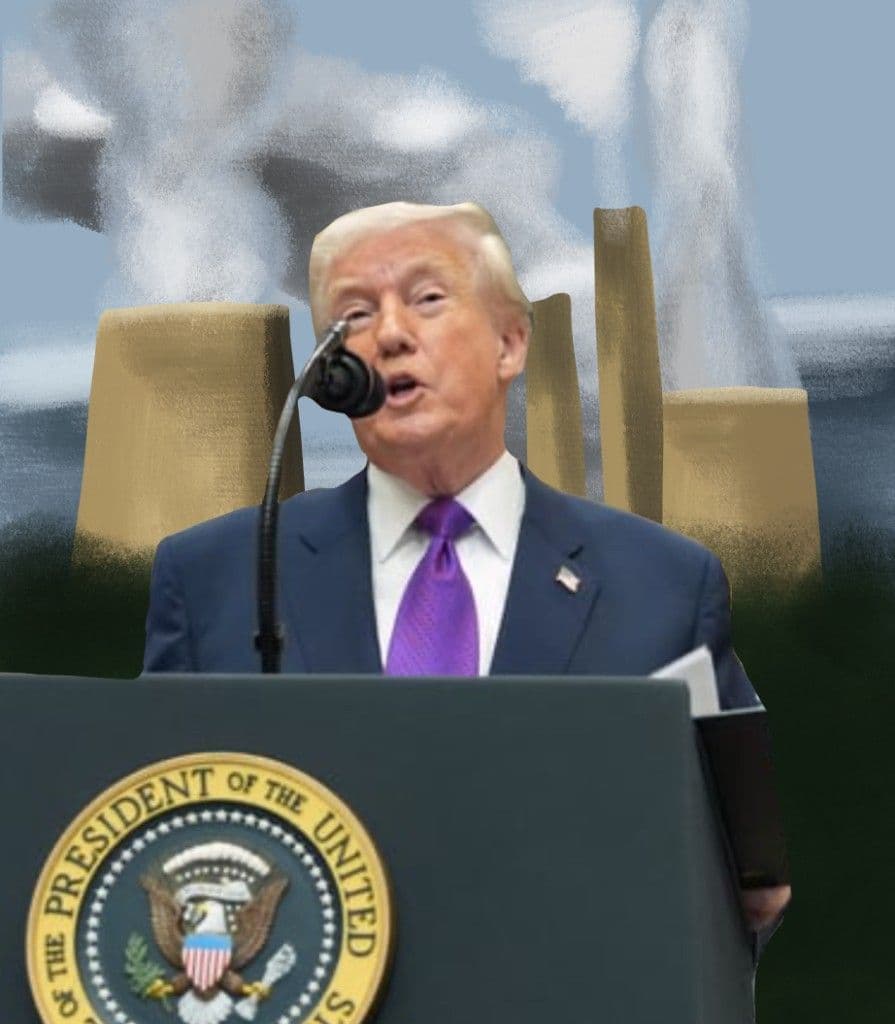
President Trump justified his repeal of the ruling by calling it a "radical" foundation for "one of the greatest scams in history."
These remarks fall in line with the Trump administration’s approach to climate change: reversing environmental regulations set by previous administrations. In his second term, President Donald Trump reversed the 2009 endangerment finding, a critical ruling by the Obama administration that recognized a range of greenhouse gasses as harmful to human health. This finding was essential in providing a legal basis for federal regulations seeking to regulate auto-makers.
During an exchange with reporters on February 12, 2026, President Trump justified his repeal of the ruling by calling it a “radical” foundation for “one of the greatest scams in history” and blamed the Obama and Biden administration for using the finding “to destroy countless jobs.” Yet many appear doubtful about the repeal. Illinois is among the 24 states suing the EPA over its dramatic rollback on climate change.
State policies such as Illinois' Clean and Equitable Jobs Act produce the best results when "federal policy supports, rather than diminishes, state climate progress."
Senior Policy Manager of the Illinois Environmental Council, Cate Caldwell, explained how state policies such as Illinois’ Clean and Equitable Jobs Act (CEJA) produce the best results when “federal policy supports, rather than diminishes, state climate progress.” The CEJA calls for closure of coal-fired power plants by 2030, but policies by the federal government could potentially undo any development the state has made on reducing air pollution.
Even so, the EPA’s reversal of the “endangerment finding” is only one of many instances of climate change policy reversal by the Trump administration. During his first presidential term, President Trump withdrew from the Paris Agreement, an international treaty aimed at limiting global temperature rise, citing his “America first” vision as the reason behind this move. And mere hours after taking office for his second term, he signed an order formally withdrawing from the Agreement.
Once again, he invoked the same argument as he had done during his first withdrawal, denouncing the climate accord as “unfair” and “one-sided” and remarking that he refused to “sabotage [U.S.] industries while China pollutes with impunity.” While rolling back on climate change policies has always been part of President Trump’s agenda, critics pointed out that his withdrawal from the Paris Agreement during his second term comes after a tumultuous year for the U.S.— the Los Angeles wildfires, hurricanes across Florida and North Carolina, extreme rainfall, just to name a few.
Many humanitarian groups also widely criticized U.S. withdrawal from the Paris Agreement. President Trump has also expressed interest in leaving several other international organizations, moves that could result in agencies like the United Nations to lose out on critical U.S. funding. Domestically, President Trump has already dismantled countless programs such as the U.S. Agency for International Development (USAID) that provides support for communities affected by issues like climate change.
Beyond its policies, some believe that there is also an economic incentive behind the Trump administration’s attempts at striking down climate action. President Trump signed an executive order on March 1, 2025, to ramp up timber production through logging, a practice that destroys natural habitat and produces harmful greenhouse gas emissions. While President Trump claimed that signing the order was necessary to skirt “heavy-handed Federal policies” that once handicapped the full utilization of U.S. timber resources, some saw it as a deliberate move to boost domestic production before imposing tariffs on foreign nations.
Zeldin and the Trump administration have already signaled their intent to rescind regulations for power plant emissions, methane leak rules, and air quality standards. As debates over budget cuts continue, the future of the Agency and its initiatives remains uncertain.