As of November 13, 2025, the longest government shutdown of 43 days is over. On November 1, funding for Supplemental Nutrition Assistance Program (SNAP) benefits dried up, with 41 million Americans who rely on the food assistance programs not receiving federal funds that day. The proposed “clean” Continuing Resolution (CR) provides a temporary solution, which continues pre-existing funds for agencies at the same levels as the previous fiscal year 2025.
Many describe this temporary spending bill as making little partisan policy changes. Along with SNAP benefits being cut, a government shutdown also impacted nal Revenue Service (IRS) operations, Federal Student Aid (FAFSA) processing, national parks and museums, economic data reporting such as inflation or GDP growth, and much more. Federal employees were furloughed (sent home without pay), and essential workers such as the military, air traffic controllers, border patrol, and Transportation Security Administration employees kept working without pay.
Yet even those essential services slowed down, causing many delays and flight cancellations. Regarding the military, Trump notably received a $130 million donation from Timothy Mellon, the heir to the Mellon banking fortune and a major political donor, to pay military personnel during the government shutdown. Unfortunately, that donation did not cover the billions needed to pay military personnel. The Senate on October 23 rejected a plan that would pay the military personnel and other select government workers on a 54-45 vote, with only three Democrats breaking ranks to support the measure.
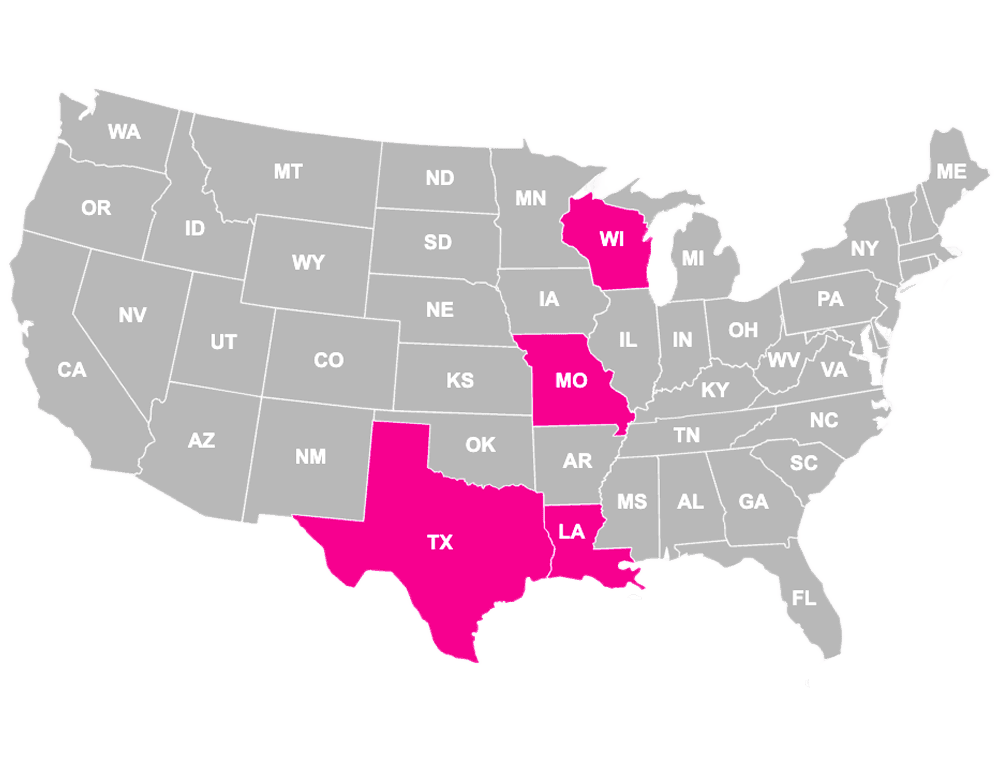
When SNAP benefits ended, many states declared state of emergencies to allocate state funds to partially continue providing benefits.
The United States D e p a r t m e nt of Agriculture (USDA) stated that federal funds would be distributed on November 1 due to the government shutdown. This occurred after the Trump Administration claimed that they would not take from the $5 billion in contingency funds to keep the benefits going. Dozens of Democrat-dominated states sued the government over the contingency fund use. On October 31, two district court judges appointed by former President Barack Obama, U.S.
District Judge Indira Talwani in Boston and U.S. District Chief Judge John J. McConnell Jr. in Rhode Island, made rulings about using contingency funds to partially pay for SNAP. The rulings were unclear on when the assistance would come and how much funding would be provided. McConnell granted a temporary restraining order, mandating that the Trump administration “must distribute” aid as soon as possible and submit a plan or “at least an update” by noon on Monday, November 3.
Talwani did not issue a temporary restraining order forcing the government to use the contingency funds. Instead her ruling gave the government until the same Monday, November 3, to decide whether or not to use the contingency funds. The Trump administration appealed the decision and asked the Supreme Court for an emergency stay on the order until the appeals court could make a ruling, calling McConnell’s ruling a “mockery of the separation of powers.” Justice Ketanji Brown Jackson issued the administrative stay, giving the U.S Court of Appeals for the First Circuit time to weigh in on the appeal.
By the 36th day of the shutdown, the CR had been voted on 14 times, failing on a 54-44 vote in similar style as the previous votes, with most Republicans for and most Democrats against the bill.
Although the Republican Party held a majority in the Senate, the filibuster prevented its passage, requiring 60 votes to end the debate (cloture) and reopen the government. Trump had continuously asked the Republicans to end the filibuster’s existence through Truth Social in order to reopen the government. On November 7, Senator Chuck Schumer (D-NY) offered a plan to Republican lawmakers that would reopen the government in exchange for a one year extension of the Affordable Care Act (ACA, also known as Obamacare) subsidies and a committee that would discuss health-care affordability, a primary concern for Democrats.
However, Republicans quickly dismissed the deal, arguing that taxpayers should not continue funding insurance companies as the price of giving the American people food. Instead, Republicans wished to discuss ACA credits after the government was reopened. A health policy study from John Hopkins Carey Business School led by Professor Ge Bai found that “from 2011 to 2021, median annual premium per enrollee grew by 5.9% ($5701 to $6035) for large group plans, 9.6% ($5683 to $6228) for small group plans, and 59.0% ($3574 to $5683) for individual plans.”
Ultimately, the shutdown had become a stand-off between providing SNAP benefits to millions for food or extending the subsidies for insurance companies under the ACA to protect millions from getting hit with a drastic increase in premiums come December. But on the 43rd day, Trump signed the funding bill into law, ending the record-long government shutdown. This end came after eight Democrats crossed party lines and voted with Republicans to pass the bill.
The eight Senators were: Jeanne Shaheen (NH), Dick Durbin (IL), Tim Kaine (VA), Maggie Hassan (NH), Angus King (ME), Jacky Rosen (NV) , Catherine Cortez Masto (NV), and John Fetterman (PA). These Senators voted in favor of re-opening the government after negotiations which modified the bill to rehire any government workers fired during the shutdown, provide backpay for the furloughed federal workers, and promise a Senate floor vote in December regarding ACA tax credit extensions.
Six Democrats from the House also voted for the CR:. Davis (NC), Jared F. Golden (ME), Adam Gray (CA), Marie Gluesenkamp Perez (WA), and Thomas Suozzi (NY). The CR would fund the government through January 30. The CR also included a “minibus” of three appropriations bills which included yearlong funding for military construction and as well as for the Department of Veteran Affairs, the Department of Agriculture and the FDA, and legislative branch operations.
Many Democrats were furious at these eight Democrat Senators for folding in the fight for healthcare and many began questioning Senate minority leader Chuck Schumer’s authority . As the government reopens, federal agencies have resumed normal operations, and TSA agents are returning to operate flights again. Lawmakers are expected to revisit ACA extensions in December, continuing the negotiations left unresolved at the time the shutdown concluded. Following the expiration of the CR next January, Congress must pass additional appropriations, or another shutdown may occur.